
Yes—you can plan an independent Chongqing visit without speaking Chinese, provided you prepare for the conversations that a map cannot finish: finding the correct entrance, meeting a driver, ordering a meal, and explaining a change of plan. English-language tools can help you start; saved Chinese names and a clear backup make the day easier when a conversation stalls.
This guide focuses on those practical moments. It does not assume that everyone speaks English or that you need a companion throughout your trip. Start with the tasks you can handle yourself, then decide whether a short session with an English-speaking local would solve a particular problem.
What to prepare before your first Chongqing outing
Save your hotel's Chinese name, full address, reception contact, and entrance photograph. Do the same for your first restaurant and meeting point. A screenshot should show the branch and street, not just an English business name. Keep these images accessible without mobile data.
Check that your map can find Chinese place names, that your translation app can display short written messages, and that you have a working payment option. Shanghai's municipal portal reports that Amap offers multilingual navigation and bilingual phrase cards for visitors across China. Test the features on your own device before relying on them. Official information about Amap's visitor services.
Use our China travel preparation guides for the setup steps. For Chongqing, add one more item: a photograph showing exactly where you intend to meet someone. A nearby landmark alone may leave both people looking at different entrances.
Chongqing navigation: check the entrance as well as the pin
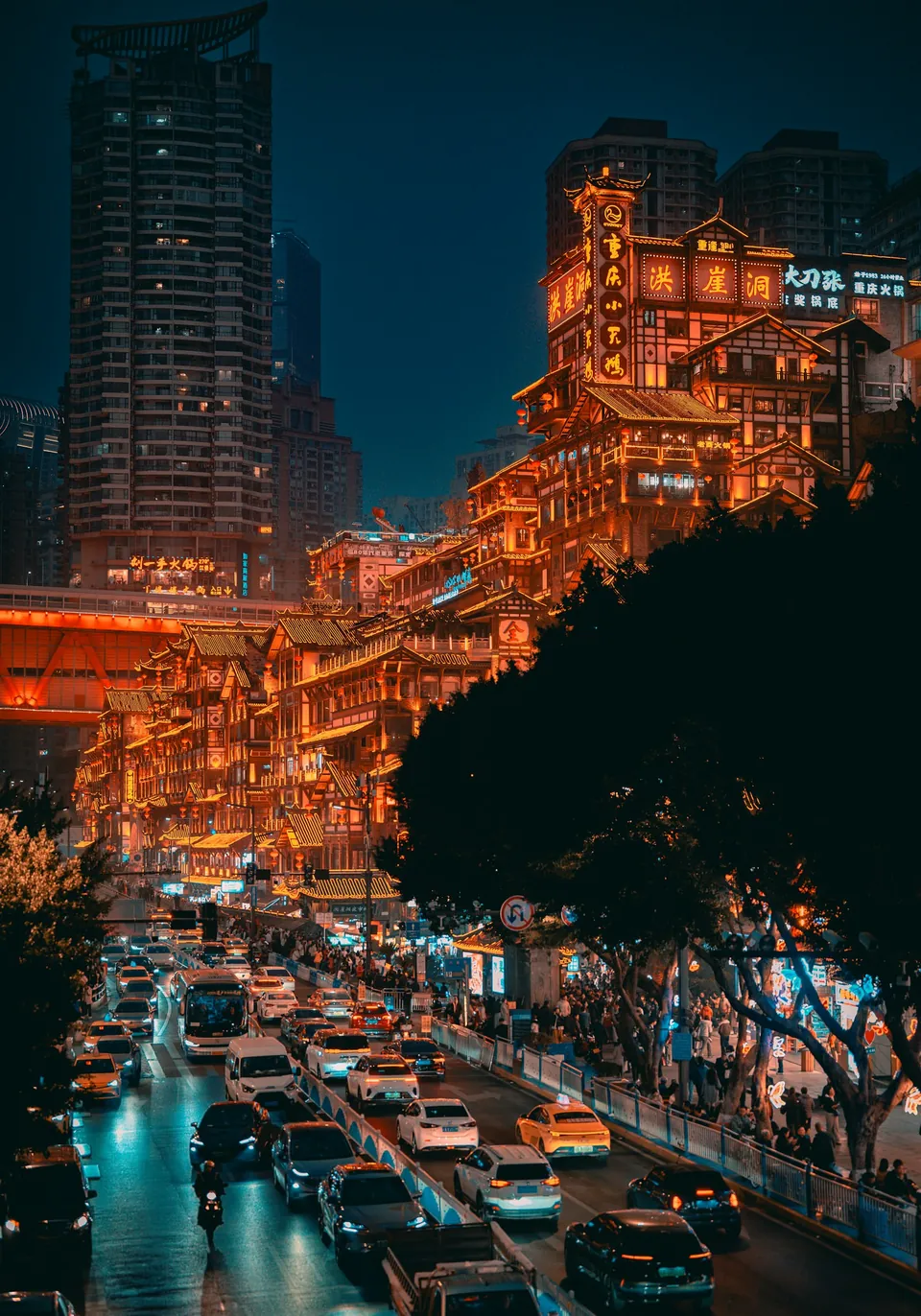
Hongyadong is a useful example of why destination names are not enough. Its riverside complex has multiple levels and traditional-style architecture, as described by the city's tourism portal. A message saying only “meet at Hongyadong” leaves important details unresolved. Hongyadong visitor introduction.
Before walking or ordering a car, confirm the street, entrance, floor or level where relevant, and an identifiable sign. Send a photograph and a map pin together. If your route includes stairs, ask about an alternative before committing to it; a short distance on a flat map does not tell you how comfortable the walk will be.
Useful written prompts are:
- 请问入口在哪里? — Where is the entrance?
- 我们在这个入口见面。 — Let's meet at this entrance.
- 有没有不用走楼梯的路线? — Is there a route without stairs?
- 请发一下具体位置和入口照片。 — Please send the exact location and a photo of the entrance.
For a Jiefangbei–Hongyadong evening, choose one meeting point and one return destination in advance. Treat the riverside view as the focus rather than adding stops across the city. Check the Chongqing city overview before deciding which areas to combine.
Metro and taxi conversations: make each message specific
For a metro trip, save the destination station, line direction, transfer if needed, and the exit nearest your actual entrance. Verify the current route in your map or the operator's information. If you ask staff for help, show the station name instead of describing the attraction at length.
For a taxi or booked car, send the Chinese destination and check the pickup location before confirming. If the driver cannot reach your current position, agree on another pickup point through the app. Choose a place where you can wait safely and recognise the vehicle.
The most useful message is often a single instruction: 请送我到这个地址。 — Please take me to this address. Follow it with the saved address. If you are unsure where to wait, use 请问在哪里上车? — Where should I get in?
Keep the hotel address ready for the return trip. A lost connection late in the evening is easier to manage when you already have a destination to show. See our maps and transport guide for broader preparation; this article intentionally avoids fixed fares and schedules that may change.
Ordering Chongqing hotpot without guessing
Decide on the broth before choosing dishes. Chongqing's tourism portal describes the city's red-oil hotpot tradition; the menu in front of you determines the options for your meal. Chongqing hotpot introduction.
Ask 有不辣的锅底吗? — Do you have a non-spicy broth? If you want a divided pot, ask 有鸳鸯锅吗? — Do you have a split pot? Do not assume either is available. 微辣 means mildly spicy, not free of chilli. Confirm which section of the pot is non-spicy before ordering for anyone who avoids chilli.
Then ask about portion sizes: 这份够几个人吃? — How many people is this portion enough for? Start with a manageable order and add more after seeing the plates. Ask staff to explain the broth charge and any other menu charges before you commit.
If you have ingredient restrictions, name the ingredient rather than relying on the dish photograph. Broth and sauces need their own questions. A translated phrase helps begin the conversation but does not establish that a meal is suitable for a serious allergy; use a clearly prepared allergy card and confirm with the restaurant.
When an English-speaking local adds value
A local can be useful when several conversations overlap: you have a short evening, a meal to arrange, a particular walking limit, and a fixed finishing time. Describe those tasks explicitly. “Help us find the entrance, agree on a pickup point, and order dinner” gives someone a much clearer role than “show us Chongqing.”
You might also need help contacting a restaurant before arrival, explaining a specific appointment, or checking whether a proposed route fits your group's pace. Confirm the individual's English ability, availability, and experience with that task. Everyday local assistance, specialist interpreting, and licensed sightseeing guiding are different services.
You can browse Chongqing locals and use this message as a starting point:
We are two English-speaking visitors in Chongqing on [date]. We need help with a clear meeting point near Jiefangbei, a route with fewer stairs, and ordering a non-spicy dinner option. We would like to finish at [time]. Can you help with those tasks, and what would your time cost?
Agree on the meeting location, duration, scope, and fee directly. Clarify meals, transport, and any other expenses separately.
Quick answers before you go
Do I need an English-speaking guide for all of Chongqing?
Not necessarily. A prepared independent visit can work well. Consider specific assistance when language, mobility, or time-sensitive arrangements make a particular part of the day difficult.
Is a translation app enough for restaurants?
It can help with simple orders. For a complicated request, show one question at a time and confirm the answer. Menu photographs alone do not explain ingredients, portion sizes, or charges.
What should I save before going out at night?
Your return address, payment backup, restaurant branch, and an exact meeting point. Keep screenshots rather than relying on a live connection for every detail.
For seasonal ideas after you have solved the communication basics, see our Chongqing winter planning article. For help with a specific day, explore independent Chongqing locals.
Have a specific task in Chongqing?
Compare independent locals and ask about your dates, language needs, and the conversation you want help with.
Browse Chongqing localsEditorial research checked October 4, 2026. Practical examples and phrase translations are editorial guidance, not claims of an accompanied visit. Official information is linked beside the relevant points; confirm venue and app details before use. GotripCN is a peer-to-peer information directory and does not sell or organise regulated tours, transport, tickets, or accommodation.